Yawning is one of the most common human behaviours, yet it remains one of the least understood.
Often dismissed as a sign of boredom or fatigue, yawning has long been suspected to play a physiological role in brain function. Now, a team of researchers at NeuRA Imaging has used real‑time MRI to capture what actually happens inside the brain and neck during a yawn – and the results suggest it is far more than a deep breath.
In a study recently published by researchers from Neuroscience Research Australia (NeuRA) and UNSW Sydney, fast phase‑contrast MRI was used to visualise the movement of cerebrospinal fluid (CSF), blood flow and tongue motion during yawning.
By comparing images of yawns acquired at NeuRA Imaging, with normal breathing and forceful deep inspirations, the team was able to isolate a unique physiological signature that distinguishes yawning from ordinary respiration.
Capturing a fleeting behaviour
Studying yawning inside an MRI scanner presents a challenge: it is brief, unpredictable and not easily performed on command. To address this, participants were shown short video clips known to reliably induce contagious yawns while lying in the Philips 3T CX MRI scanner at NeuRA Imaging.
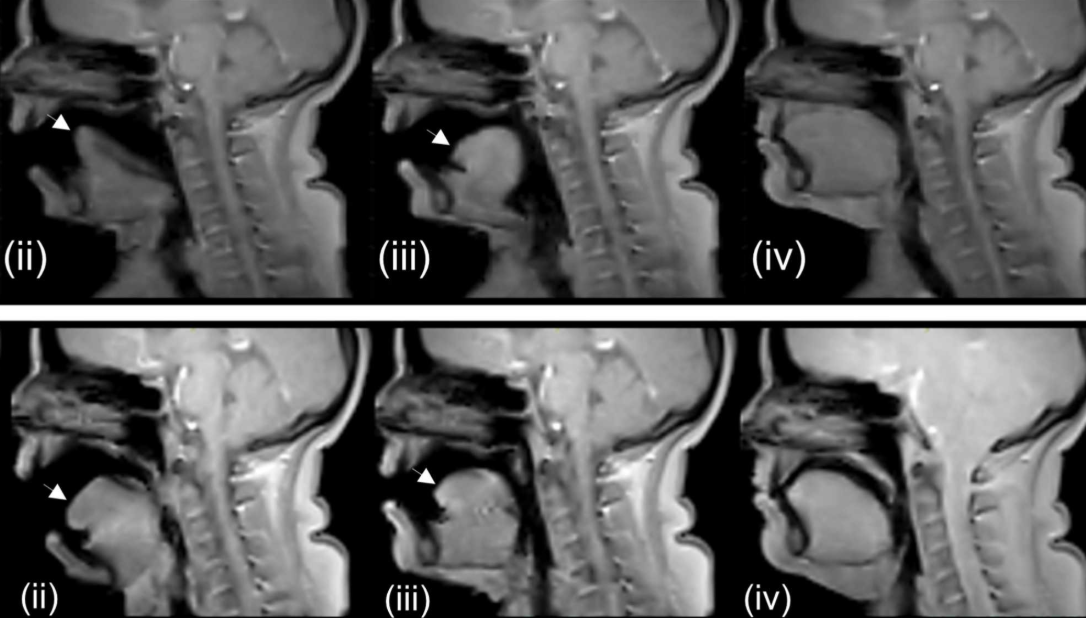
Using rapid, ungated MRI at the level of the upper cervical spine, the researchers measured CSF flow alongside venous outflow in the internal jugular vein and arterial inflow through the internal carotid arteries. At the same time, high‑speed anatomical imaging captured the complex movements of the tongue and jaw as each yawn unfolded.
Not just a bigger breath
Deep breaths and yawns both produced larger changes in CSF and blood flow than quiet breathing. But yawning stood out in how these flows were organised.
During a yawn, CSF was far more likely to flow in the same direction as venous blood draining from the brain. This alignment of CSF and venous flow was rarely seen during normal breathing or during deep, voluntary inhalations, which typically produced opposing flow directions.
Yawning was also associated with a pronounced increase in arterial inflow to the brain. Blood flow through the internal carotid arteries surged during yawns, a response that did not occur during deep breaths of similar duration. These findings indicate that yawning is not simply an exaggerated respiratory movement, but a distinct neurophysiological event.
A highly stereotyped motor pattern
Real‑time sagittal MRI revealed that yawns were also remarkably consistent within individuals. Each yawn followed a highly reproducible sequence of tongue retraction, jaw opening and airway expansion. Even when participants attempted to suppress a yawn, the internal tongue movements often progressed in the same pattern before the behaviour was curtailed.
This stereotype points to the presence of a central pattern generator – a dedicated neural circuit, likely located in the brainstem, that orchestrates yawning in much the same way as breathing or swallowing. Once initiated, the yawn appears difficult to interrupt.
Rethinking the purpose of yawning
The combination of altered CSF flow, increased venous drainage and surging arterial inflow provides new insight into why yawning may have been conserved across species. The distinct alignment of fluid and blood movement could promote redistribution or mixing of CSF, which plays a key role in delivering nutrients and removing metabolic waste from the brain.
Adam Martinac told UNSW Newsroom that the findings point to a promising area for further research, particularly in relation to how the brain clears waste as it ages.
“We think there’s something here really worth investigating further. Those neurodegenerative diseases are associated with an accumulation of waste and the older you get the more waste there can be,” said Martinac.
“We don’t know how strong the link is related to how CSF is cleared, but in the last 10 years there have already been a lot of investigations into that area, and this can be another element.”
At the same time, the influx of arterial blood supports theories that yawning may help regulate brain temperature or maintain alertness under conditions of fatigue. While the study does not directly test these hypotheses, it establishes a clear physiological foundation for future research.
The power of real‑time imaging
As with previous NeuRA Imaging studies examining coughing, swallowing and other transient behaviours, this work highlights the value of modern MRI systems capable of capturing rapid physiological events. The ability to visualise fluid dynamics as they happen provides insights that static imaging simply cannot offer.
For such an everyday act, yawning reveals itself to be a precisely coordinated interaction between neural control, fluid motion and vascular response. Sometimes, understanding the brain begins not with rare disease, but with the simplest things we do every day.
Read the full publication in the Journal of Respiratory Physiology & Neurobiology.
Recent Comments